
Written By Faizan – Last Updated 7 Mar, 2026
While vaping is a technology-driven alternative to smoking, it relies on high-output lithium-ion energy. Understanding battery chemistry and electrical safety isn’t just about making your device last – it’s about personal safety.
In 2026, as devices become more powerful and “Disposables” dominate the market, following these Canadian safety standards is essential.
Quick Safety Checklist :
If you remember nothing else, remember these three:
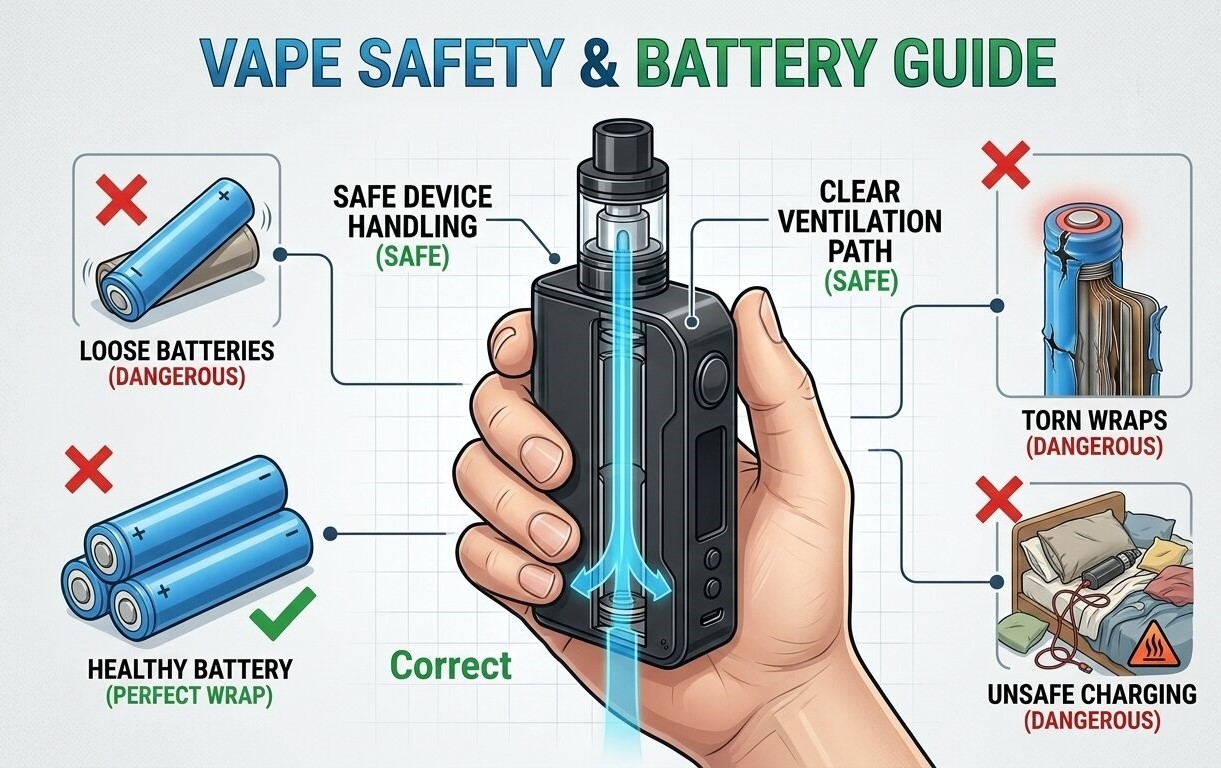
- Never carry loose external batteries in your pocket (use a plastic case).
- Never use a charger that didn’t come with your device or isn’t a certified “Slow Charge” block.
- Stop immediately if your device feels painfully hot or smells like “burnt electronics.”
1. Understanding Your Battery Type
Vape technology in 2026 falls into two distinct categories. Your safety protocol depends on which one you use.
Built-in Batteries (Internal)
Found in most Disposables and Pod Systems (e.g., Uwell Caliburn, Level X).
- The Safety: These are sealed units. You don’t handle the battery directly, which reduces the risk of shorts.
- The Risk: If the device gets wet or the casing is crushed, the internal battery can “vent” (release gas).
- Note: Many 2026 disposables now feature Smart Chips that cut off power if the battery overheats.
External Batteries (Removable)
Used in Advanced Box Mods. Common sizes include 18650, 20700, and 21700.
- The Safety: These offer the most power but require the most respect.
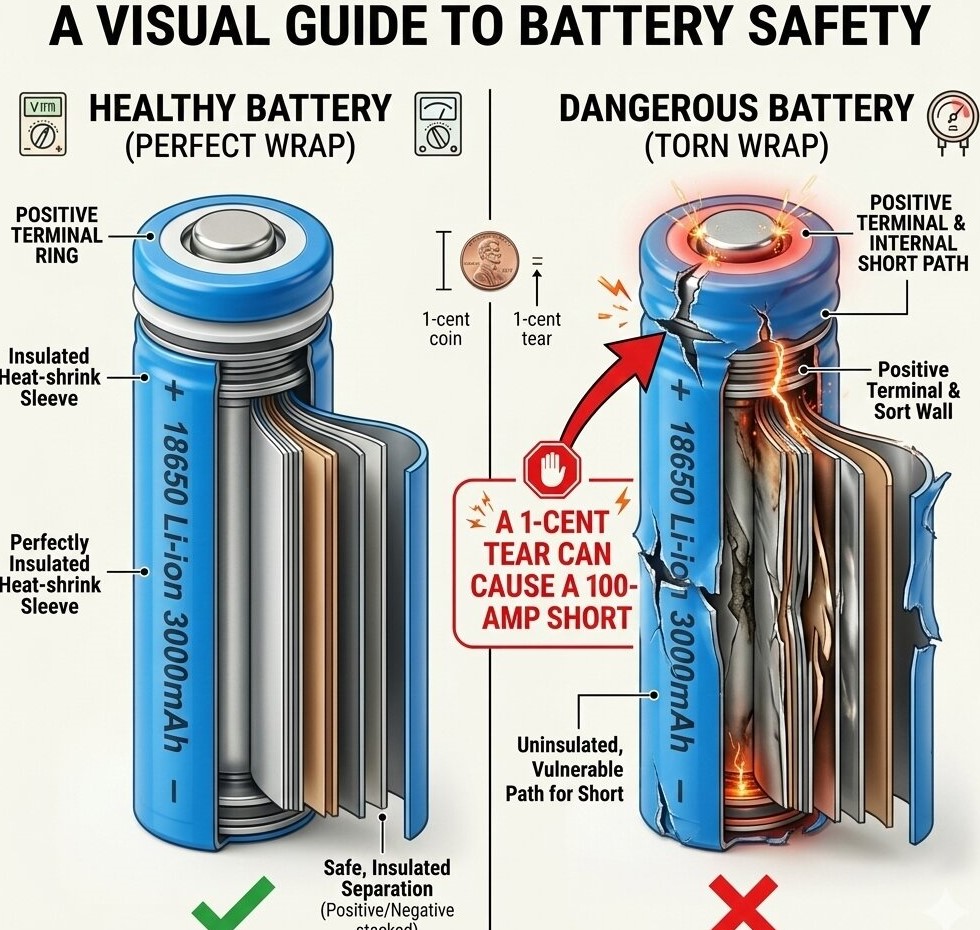
- The Risk: The entire “skin” of the battery is part of the electrical circuit. A tiny tear in the plastic wrap can cause a massive spark if it touches a key or a coin.
2. Safe Charging Practices (2026 Standard)
Improper charging is the #1 cause of vape-related accidents in Canada.
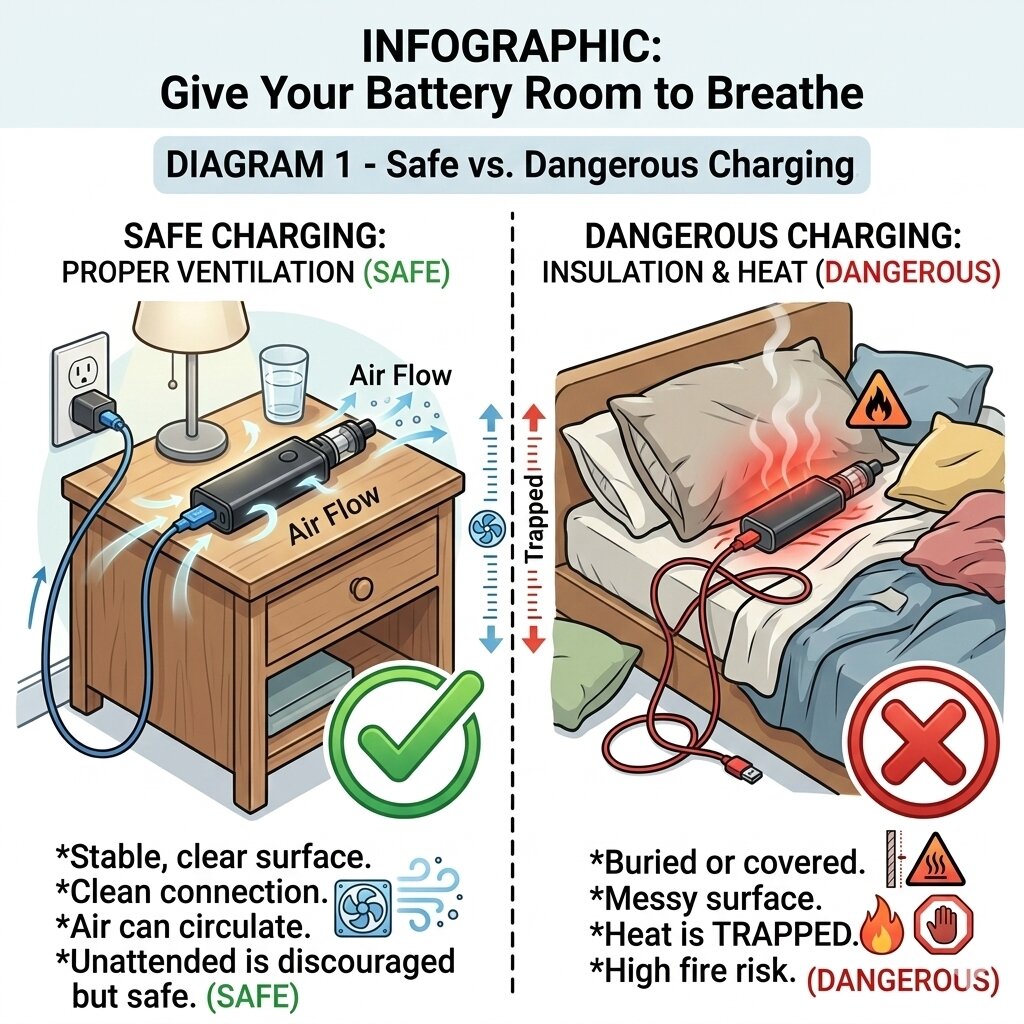
- Avoid “Fast Chargers”: Your 65W MacBook or Samsung Ultra charger might be too powerful for a small vape. Stick to a standard 0.5A or 1.0A wall adapter.
- The “Flat & Hard” Rule: Never charge on a bed, sofa, or under a pillow. Fabric traps heat. Always charge on a desk or kitchen counter.
- No “Overnighting”: While 2026 devices have “overcharge protection,” lithium batteries degrade faster when kept at 100% for long periods. Unplug it once the light turns green.
3. Warning Signs: When to Stop Using Your Device
If you notice any of the following, cease use immediately and visit a professional vape shop for an inspection.
- Extreme Heat: It’s normal for a vape to feel warm (like a smartphone), but if it’s too hot to hold, the battery is struggling.
- The “Hiss” or “Pop”: Unusual sounds from the battery (not the coil) indicate internal gassing.
- Battery Swelling: If your pod system looks “pregnant” or the seams are splitting, the lithium cell has expanded. This is a fire hazard.
- The “Sweet/Metallic” Smell: This is the scent of leaking battery electrolyte. It is toxic and highly flammable.
4. Advanced Battery Safety (The “Removable” Rules)
If you use a device with 18650 or 21700 batteries, follow these “Pro” rules:
- Check Your Wraps: Inspect your batteries every morning. If the plastic wrap has a nick or a tear, do not use it. Visit your local shop to have it “re-wrapped” for a couple of dollars.
- Use a Battery Case: A $2 plastic case prevents your batteries from touching metal objects in your bag. Never throw a loose battery into a purse or pocket.
- Married Pairs: If your mod takes two batteries, keep them “married.” Charge them together and use them together so they drain and age at the same rate.
Pro Tip: Expert Advice at the Counter
The best safety feature isn’t a chip—it’s knowledge. If you aren’t sure if your battery is safe, walk into any reputable Canadian vape shop like Vapester Smoke Shop Commercial Dr. or Mail us at [email protected]: Experts can:
- Inspect your battery.
- Recommend the safest charger for your specific model.