Health, Cost & Which One Helps You Quit
If you’re comparing vaping vs. smoking, you’re likely at a decision point. In 2026, the landscape has shifted with new medical guidelines and tax harmonizations across all provinces. You are likely:
- Thinking about quitting cigarettes
- Trying to understand the health difference
- Wondering which is cheaper
- Or worried about switching
This guide breaks it down clearly, using Canadian context, 2026 real-world cost math, and current public health positions. Read our article “Vaping in Canada” to learn more.
Quick Answer:
- Smoking burns tobacco → creates tar + toxic chemicals.
- Vaping heats liquid → no combustion, no tar.
- 2026 Medical Stance: Canadian health bodies now recommend vaping as a “last resort” tool—to be used if counseling, patches, or gum haven’t worked (Source: CMAJ 2026 Clinical Guidelines).
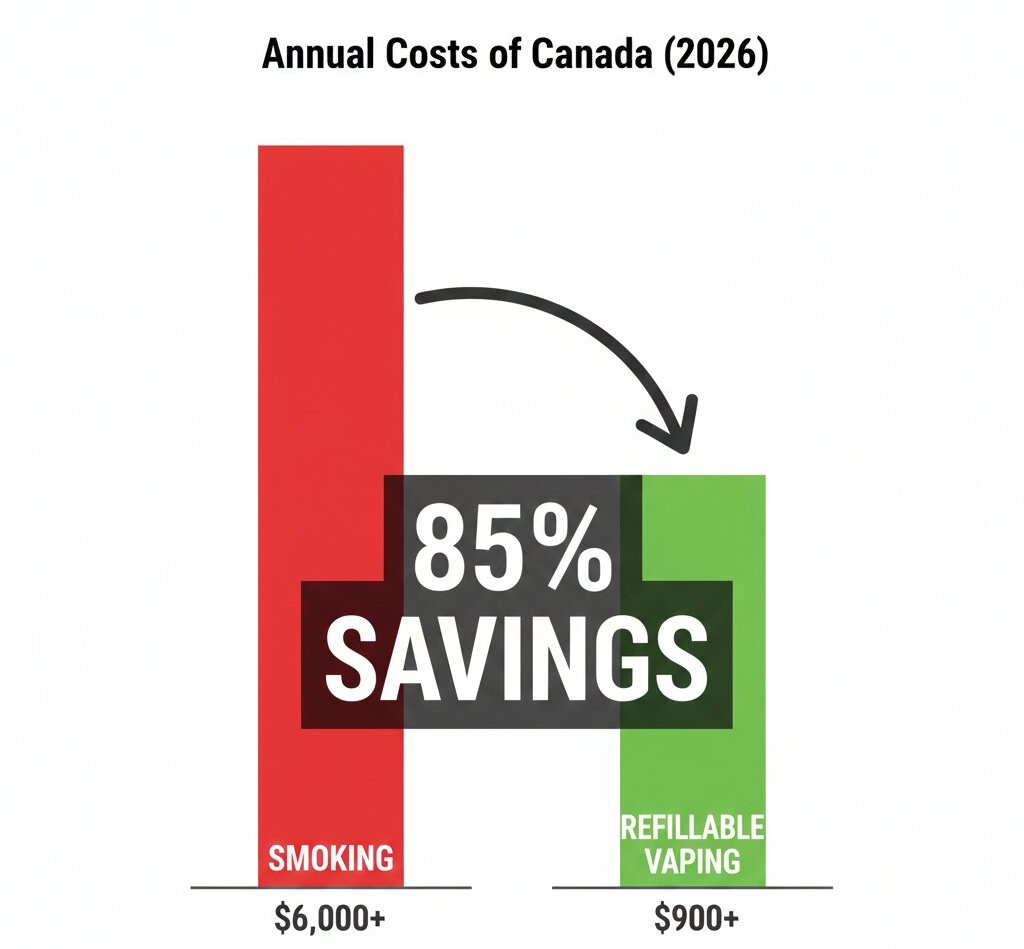
- Cost: Smoking remains dramatically more expensive. Even with 2026 vape tax hikes, switching can save you over $5,000 per year.
The Core Difference: Combustion vs. Vaporization
This is the most important distinction.
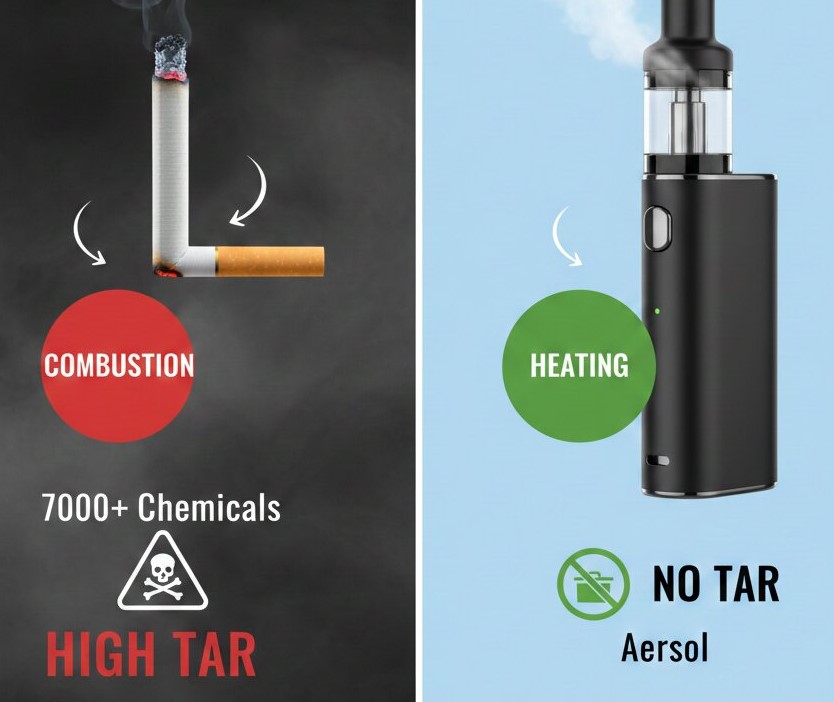
Smoking = Combustion: When you light a cigarette, tobacco burns at ~800°C. This creates smoke, produces tar, produces carbon monoxide, and releases thousands of chemicals. The danger comes largely from the burning.
Vaping = Vaporization: A vape device heats liquid (no flame) to produce an aerosol, not smoke. It does not create tar or carbon monoxide. This is why health authorities classify vaping as harm reduction, not harmless.
Health Comparison: Vape vs. Smoking
| Factor | Smoking | Vaping |
|---|---|---|
| Burns tobacco | Yes | No |
| Produces tar | Yes | No |
| Carbon monoxide | Yes | No |
| 2026 Clinical Status | Leading cause of preventable death | Harm reduction for adult smokers |
| Nicotine addiction | Yes | Yes (if nicotine used) |
What Health Authorities Say in 2026
Major public health bodies (UK NHS, Public Health England) continue to state that vaping is significantly less harmful than smoking. Health Canada states vaping is less harmful than smoking but carries risks.
2026 Update: The Canadian Task Force on Preventive Health Care now suggests doctors offer vaping only to patients who have failed with other approved methods (patches/gum) or have a strong preference for the habit of vaping.
Short-Term Effects Comparison
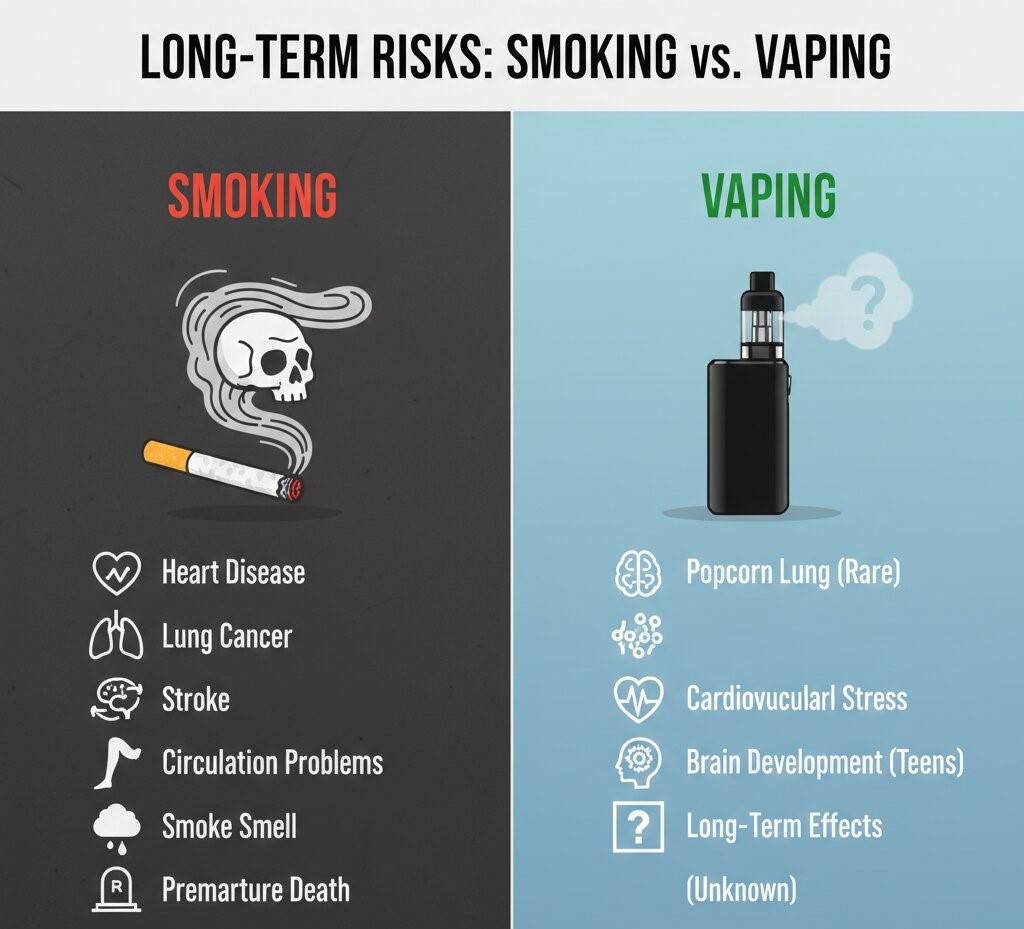
Smoking: Shortness of breath, persistent cough, stained teeth, smoke smell, reduced stamina.
Vaping: Throat irritation, dry mouth, possible coughing during transition, and nicotine dependence (if used).
Many smokers report: Improved breathing within weeks, better taste/smell recovery, and reduced “smoker’s cough.” However, 2026 data emphasizes that dual-using (vaping and smoking at the same time) provides almost no health benefit. You must switch 100% to see improvements.
Cost Comparison in Canada (2026)
The gap is dramatic, despite in 2026, Nova Scotia tax update which saw the province join the coordinated excise system.
Average Cigarette Cost (2026)
Average pack price: $16.50–$21.00 (depending on the province).
- 1 pack/day: ~$550/month → **~$6,600 per year.**
Average Vaping Cost (2026)
Disposable User: 1 device every 3–4 days (~$22 each). Monthly: $180–$220.
- Refillable Pod User: E-liquid ($35/30mL bottle including tax) + Coils ($20/month). Monthly: $55–$90.
| Type | Monthly Cost | Yearly Cost |
|---|---|---|
| Smoking (1 pack/day) | ~$550 | ~$6,600 |
| Disposable Vaping | ~$200 | ~$2,400 |
| Refillable Vaping | ~$75 | ~$900 |
Does Vaping Help You Quit Smoking?
Evidence suggests vaping can be an effective tool for adult smokers because it delivers nicotine and mimics hand-to-mouth behavior. In 2026, Canadian researchers emphasize that vaping replaces the ritual that patches don’t touch.
Why some people fail:
- Choosing the wrong nicotine strength (Too low = cravings; Too high = dizzy).
- Using low nicotine when heavily addicted.
- 2026 Pro-Tip: “Nicotine Salt” systems (usually 20mg/mL) are best for heavy smokers looking to replicate the cigarette “hit.”
Is Vaping “Healthy”?
No. It is less harmful than smoking, but not harmless. The key 2026 distinction: Less harmful ≠ healthy.
- If someone never smoked, they should not start vaping.
- If someone smokes, switching may reduce exposure to toxic combustion byproducts.
Smell & Social Impact
- Smoking: Clothes and cars smell; yellowing teeth; extreme indoor restrictions.
- Vaping: Vapor dissipates faster; minimal lingering smell. Note that in 2026, many Canadian cities have extended “Smoke-Free” bylaws to include all public vaping (See our Vaping Laws Guide).

Decision Framework: 2026 Edition
- Don’t smoke? Neither is better. Don’t start.
- Smoke heavily? Switching to a refillable kits is your best move for health and budget.
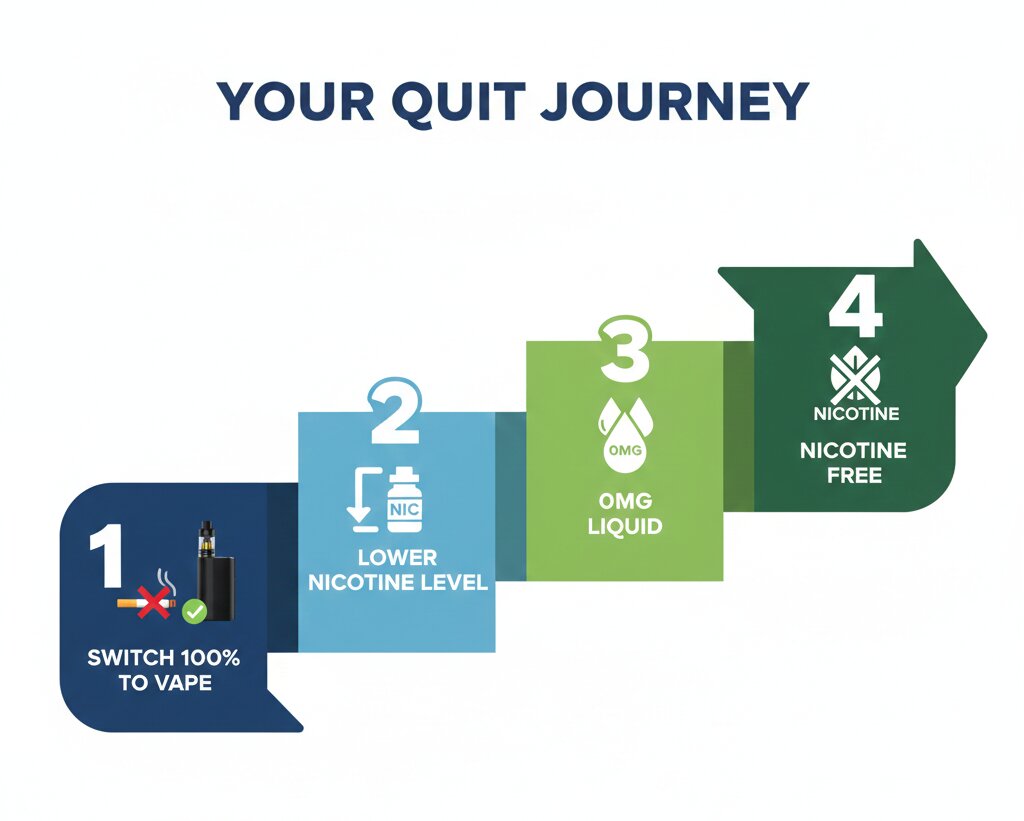
- Want to quit nicotine? Use vaping as a short-term “bridge,” then taper your nicotine levels (20mg → 10mg → 3mg → 0mg).
Final Thoughts for 2026
Smoking and vaping are not equal. Smoking is combustion plus decades of proven damage. Vaping is no combustion and lower toxic exposure, but carries its own risks. The best choice for health is quitting nicotine completely. But for adult smokers unable to quit, 2026 clinical guidelines recognize vaping as a powerful transitional tool to get off combustible tobacco forever.